The Truth About Gluten-Free Flours
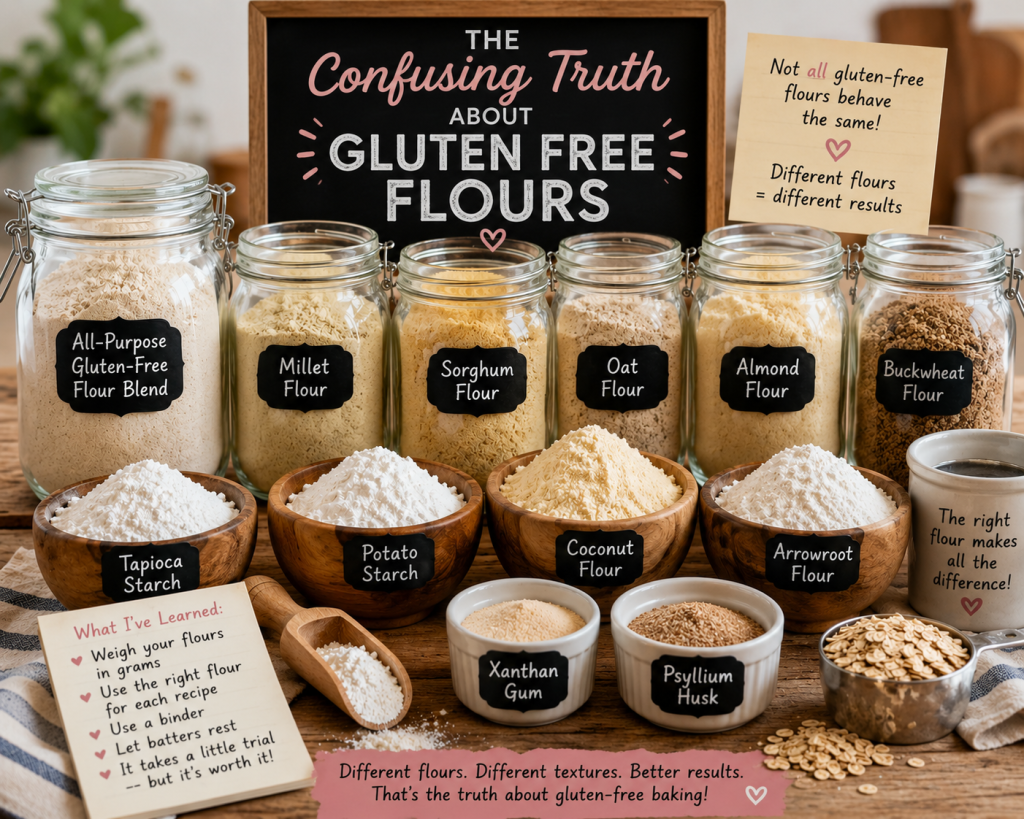
When our family first had to go gluten free, I assumed gluten-free all-purpose flour would work exactly like regular flour. I thought I could simply replace it cup for cup in every recipe and everything would turn out the same as before. I quickly learned that gluten-free baking does not work that way.
I also learned that weighing gluten-free flours in grams on a kitchen scale made a huge difference in my baking. Not all gluten-free flours measure the same by cups, and once I started weighing ingredients instead, my recipes became much more consistent and reliable.
At first, the idea of stocking multiple gluten-free flours sounded overwhelming. Now, I realize it actually gives me more freedom to make gluten-free food taste better. Store-bought gluten-free food does not even begin to compare with homemade gluten-free food.
When I started out, some recipes turned out dry while others were gummy or dense. At one point, I bought a cheaper gluten-free flour blend that actually tasted pretty good — except it turned all of my baking purple. That was the moment I realized not all gluten-free flours behave the same way.
I learned that bread recipes often need completely different flour combinations than muffins or cookies. Over time, I realized that different gluten-free recipes need different types of flour to create the right texture and taste.
I also worried that keeping multiple flours in my pantry would become too expensive. While it can be costly in the beginning, I found that I actually waste fewer ingredients now because I am making food my family truly enjoys eating.
Our Homemade All-Purpose Gluten-Free Flour
I keep a homemade all-purpose gluten-free flour blend on hand for my favorite bread recipe, muffins, brownies, and some cookies. This is still the flour blend I use the most overall. Making it myself has been a huge cost savings for our family.
My blend is made with:
-
- white rice flour
-
- brown rice flour
I actually grind my own rice flours in a grain mill. The original recipe also calls for xanthan gum and milk powder. However, I choose not to add xanthan gum directly to the flour blend. Instead, I add a binder separately during the baking process.
I also skip the milk powder because we have family members with dairy intolerance, and honestly, we do not notice much difference without it. At times, I have added oat milk powder, but it still does not seem necessary for our family.
Millet Flour and Sorghum Flour
I also keep millet flour in my pantry. Before going gluten free, I had never even heard of millet flour, but now I love it. It is packed with nutrition and has a wonderful flavor.
I usually combine millet flour with sorghum flour and tapioca starch. This combination makes some of the best bagels, pita bread, and English muffins we have tried. I also use another bread recipe that my family enjoys with this flour combination.
Recently, I started milling my own millet and sorghum flour because I can buy 25-pound bags of grain for a much better price than buying the flour pre-ground. Running the grains through the grain mill gives me flour with an excellent texture while also saving money.
Potato Starch and Tapioca Starch
Potato starch and tapioca starch are two more ingredients I had never heard of before going gluten free. Both are staples in my pantry now.
I use them in my homemade all-purpose gluten-free flour blend, and I often substitute potato starch for tapioca starch if I run out. I also use tapioca starch separately in recipes that specifically call for it.
Oat Flour
I use oat flour in several recipes as well. Most of the time, I simply grind gluten-free oats in my food processor to make my own oat flour.
I use it in:
- energy balls
- healthy Twix bars
- meatloaf
- savory recipes
It works wonderfully as a filler in many recipes.
Almond Flour, Coconut Flour, and Arrowroot Flour
I use almond flour in some quick one-serving breads and in combination with coconut flour for our favorite cornbread replacement recipe.
Some members of our family cannot tolerate corn, so this recipe has become a delicious substitute. It uses:
- almond flour
- coconut flour
- arrowroot flour
I also use arrowroot flour in my homemade gravy recipe. It can sometimes be replaced with all-purpose gluten-free flour or tapioca starch, but I personally think arrowroot gives the best flavor and texture when used in the correct proportions.
Buckwheat Flour
I also keep a small jar of buckwheat flour in the pantry. I mainly use it in pancakes and waffles, although I am still experimenting with it.
The Binders I Use
One thing I have learned is that most gluten-free recipes need some type of binder. I usually use xanthan gum or psyllium husk.
- Xanthan gum works best for muffins, cookies, and brownies.
- Psyllium husk works best in most of my bread recipes.
Both make a huge difference in texture and structure.
Another thing I have learned is that gluten-free batters and doughs often need time to rest after adding a binding agent like xanthan gum or psyllium husk. Allowing the batter to sit for a few minutes gives the flours time to absorb the liquid and usually creates a much better texture.
Building a Gluten-Free Pantry Over Time
I know this seems like an extensive list of flours, but I promise it makes a huge difference in feeding our family good gluten-free food.
If you are just beginning gluten-free cooking, do not feel like you need to buy every flour at once. We slowly built our pantry over time as we learned which flours worked best for our favorite recipes.
It took time for me to slowly build up our pantry because of the expense. However, I now love these flours so much that I actually keep five-gallon buckets of many of them stored in our basement.
What once felt confusing has now become part of our normal kitchen routine. Instead of trying to force one flour to work for every recipe, I have learned that different gluten-free flours each serve a purpose.
Our pantry now holds many different kinds of flour, and honestly, that flexibility has made gluten-free cooking and baking much more enjoyable.
I love watching family members — even those who are not gluten free — enjoy food again. It brings a smile to my face. Sometimes you will even me jokingly say, “Someone around here sure does know how to cook.”
I am so thankful we took the time to understand gluten-free cooking and gluten-free flours. For our family, it has been well worth the investment.
Follow along as I continue sharing more about gluten-free cooking, baking, and feeding a family around the table.